Madeira without a car works when the trip is built around the island you can reach, rather than the island you can circle on a map. I would stay car-free in Funchal for a week without hesitation. I would not book a remote north-coast house and expect a timetable to fix every plan. The decision comes down to where you sleep, when you arrive, and whether a missed connection is allowed to change the day.
Choose Funchal when you need a plan B nearby
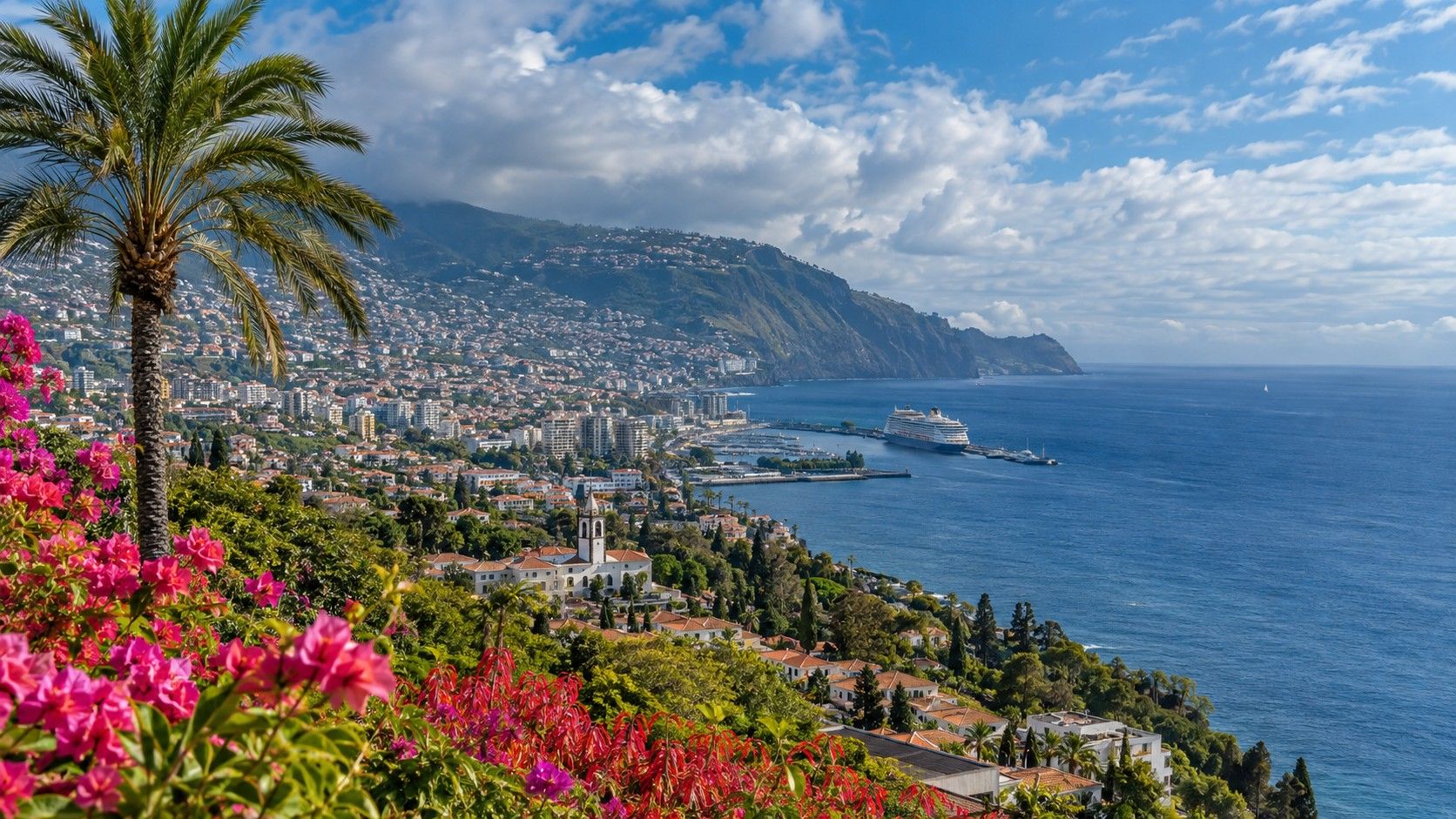
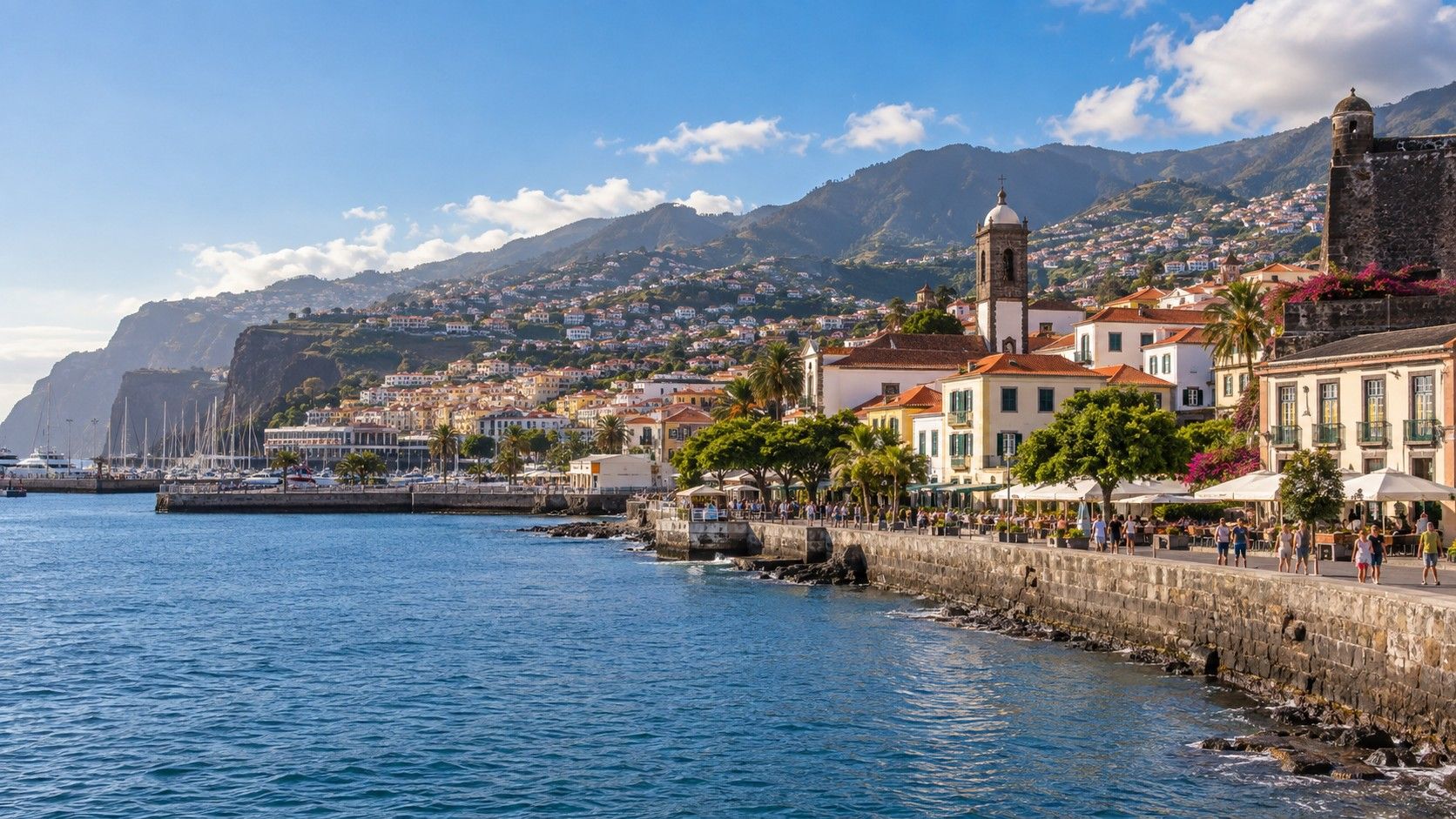
Funchal is the useful base for Madeira public transport because a failed plan rarely ends the day. A city bus, taxi rank, café, supermarket and several tour pickup points can sit within a short walk. The harbour, old town and lower São Martinho suit a car-free stay better than an apartment high above the centre, even if its view is better.
Check the exact address on a contour map before booking. Madeira has short distances that feel long on foot. A property called central can be above the main road, with a climb that is fine once and tiresome with bags or wet shoes. I look for the nearest stop and trace the walk back uphill. A flat five-minute walk and a descent followed by a bus ride are different promises.
Funchal also gives you forgiving half-days. Monte is reachable by bus or cable car, while Câmara de Lobos is a simple local outing. You can wait out a doubtful morning, have lunch, and still go somewhere. That flexibility is part of what a car gives elsewhere; in Funchal, a good location supplies much of it.
Use SIGA buses for clear town journeys
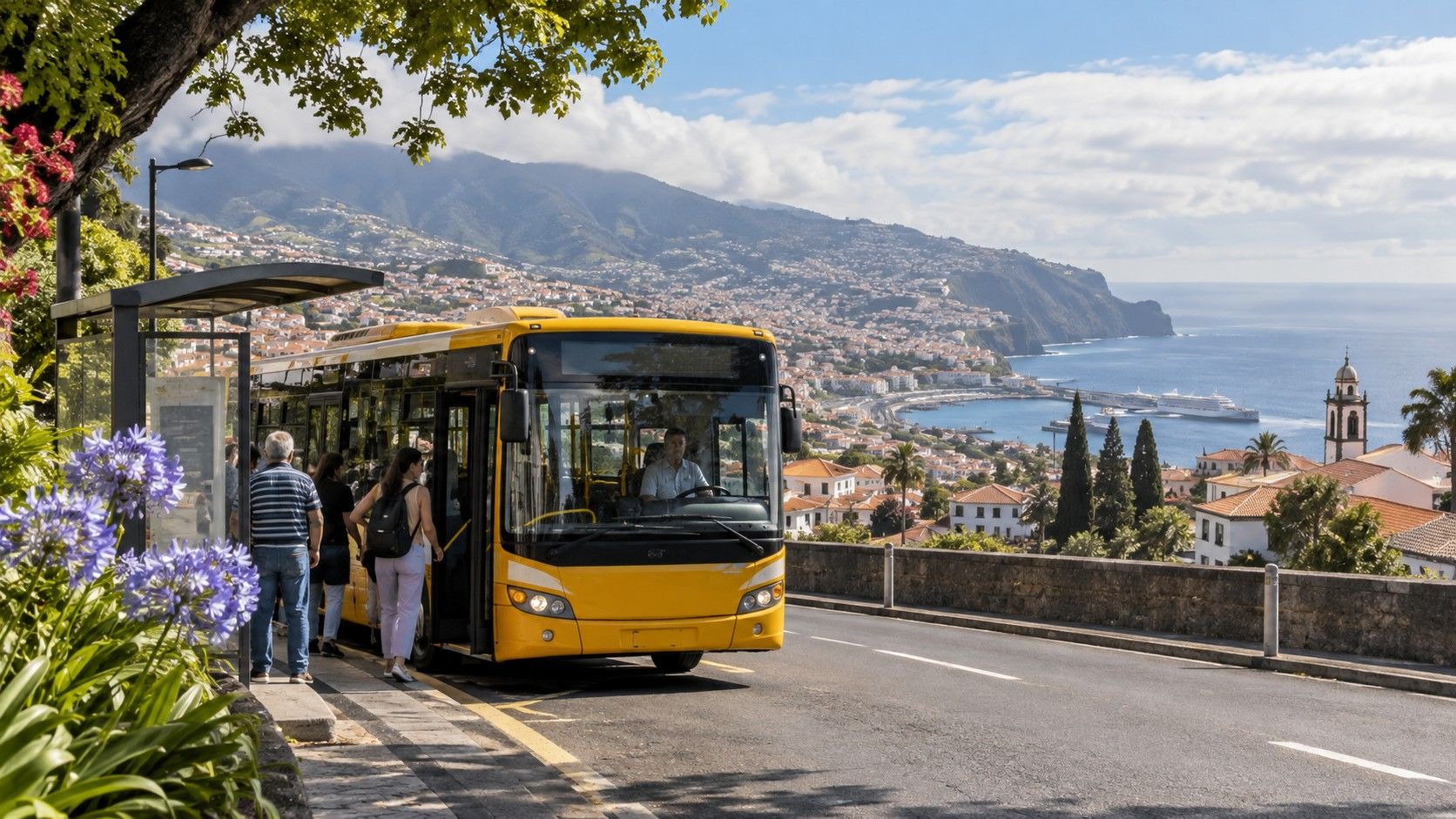
SIGA buses cover useful ground, especially for trips beginning and ending near Funchal. They suit the airport corridor, Câmara de Lobos, parts of the south coast and ordinary city movement. They are less convincing when a day depends on two rural connections after a long walk. A route can look possible on paper, while the gap between services becomes a long wait beside the road.
Save the relevant timetable and inspect the final return before leaving the hotel. Services can differ by weekday, weekend, school period and holiday. Reception staff may know the local pattern, but an assurance that there is a bus is only the start. Confirm the stop name, direction, date and last useful departure yourself.
Funchal to Câmara de Lobos gives enough slack that a slow coffee does not spoil the outing. Funchal to a far trailhead is another proposition. It may work, but the return becomes a quiet deadline during the walk. I would not build a hike around the last rural service on the first day of a trip.
| Plan | Car-free verdict | Check first |
|---|---|---|
| Funchal, Monte and Câmara de Lobos | Usually easy by local transport | Last service and hotel hill |
| Airport to central Funchal | Easy in daytime, awkward late at night | Flight delay risk and final bus |
| East or west coast sights | Often better as an organised day | Pickup, walking and return time |
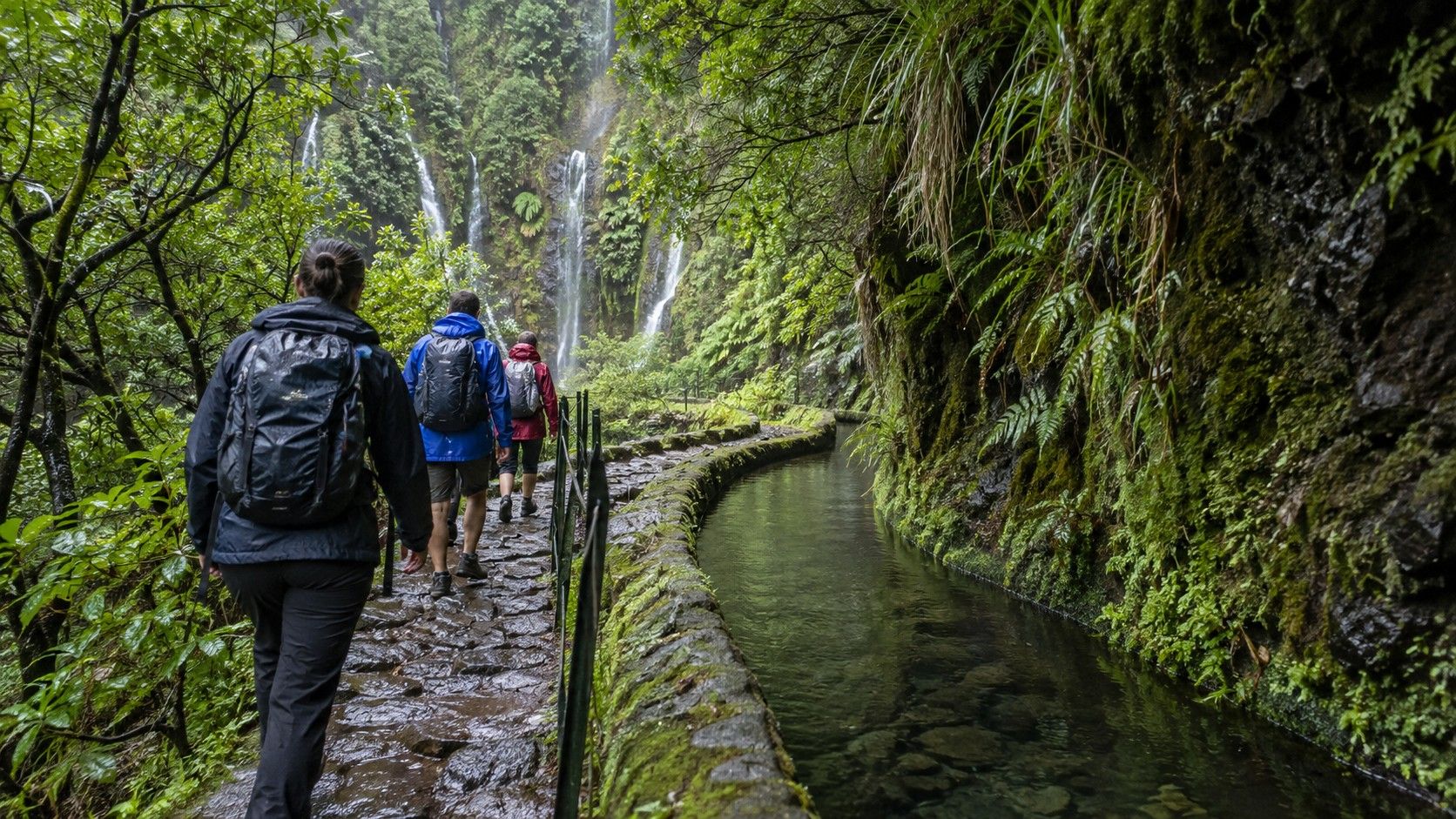
| Remote levada with a different finish | Possible but fragile by bus alone | Weather, trail access and backup taxi |
This is not an argument against buses. It is a way to avoid giving them a job they do poorly. A bus day and a tour day can feel calmer than trying to prove every part of Madeira is independently reachable in one visit.
Take an organised day when the route has awkward ends
A group tour makes sense when the day has a viewpoint, a walk and a finish somewhere other than where it began. A rental car solves that by waiting at one end, but somebody must drive mountain roads and collect it. A tour solves the transport puzzle. It may feel less spontaneous, but it is often the cleanest use of a complicated day.
Read the plain details before paying: pickup window, walking distance, meal stop and the policy for late guests. An east or west Madeira outing may mean several quick stops, or a real hike. If it returns to Funchal at 18:00, I would not reserve dinner across town for 18:30.
Weather is another reason tours help. Drivers often know when a high viewpoint is in cloud and a lower road has a better chance. They cannot change the forecast. Funchal can be bright while the mountains are wet. Carry water and a layer, and ask whether a closed trail means an alternative stop or a shorter day.
Make the airport transfer boring after a late flight
Madeira Airport is close enough to Funchal that the transfer itself is easy, but late arrivals expose weak planning quickly. If the flight lands after useful buses finish, public transport is unavailable. A booked transfer or taxi is usually worth the certainty when the hotel is uphill and you have spent the day in airports.
Read the accommodation arrival instructions before flying. A small property may have a narrow entrance, gate code or host who needs a message rather than a surprise after midnight. Ask whether a taxi price is for the vehicle or each passenger, and whether there is a late supplement. Those small questions prevent an argument beside arrivals.
For a daytime arrival, the airport bus can be sensible if you are going to central Funchal and travelling light. It is less appealing if you need another city bus with a suitcase. A taxi may cost more, but it can return the first hour of the trip: bags are dropped and you are oriented before the afternoon disappears.
Use taxis to bridge gaps, not for every kilometre
Taxis are strongest in the seams between larger plans. They can connect a bus stop to a hilltop hotel, recover a delayed return from a village, or get you to an early tour pickup when the first city bus is too late. Save a local taxi number before leaving Funchal and ask a driver, hotel or tour desk for a realistic fare.
Do not judge cost from a short map distance alone. Roads curve around ravines, and a four-kilometre climb can take longer than expected. Ask about the meter or likely price before departure. For an isolated trailhead, arrange the return as carefully as the outward ride. Mobile signal can be patchy in the mountains.
Sharing a taxi changes the calculation. Two people travelling to a difficult trail start may pay little more than a messy chain of bus tickets while gaining daylight. Solo travellers should be more selective. I use taxis to protect the expensive parts of a day, such as an airport transfer or booked walk, and buses for routine movement.
Leave slack for connections and change the order for weather
A good car-free Madeira itinerary has spare time built into it. Put a high mountain walk early enough that you can exchange it for Funchal, Monte or Câmara de Lobos if the forecast changes. Do not stack an airport arrival, luggage drop, cross-island bus and sunset viewpoint into one afternoon. It looks efficient in a notebook and feels miserable when the first bus is late.
Keep one low-commitment day in a stay of five or six nights. In Funchal, that might mean the old town, the cable car when cloud lifts, or Câmara de Lobos after lunch. You need somewhere decent to move a plan that rain, wind or a missed connection has displaced.
Travelling without a car makes the limits obvious sooner. You pick a base with pavements, check the last bus before lunch, and stop treating every scenic map pin as a same-day target. Madeira still asks for patience. In return, the trip can be less tiring, with fewer mountain roads to negotiate and more time to sit down when the weather has other ideas.