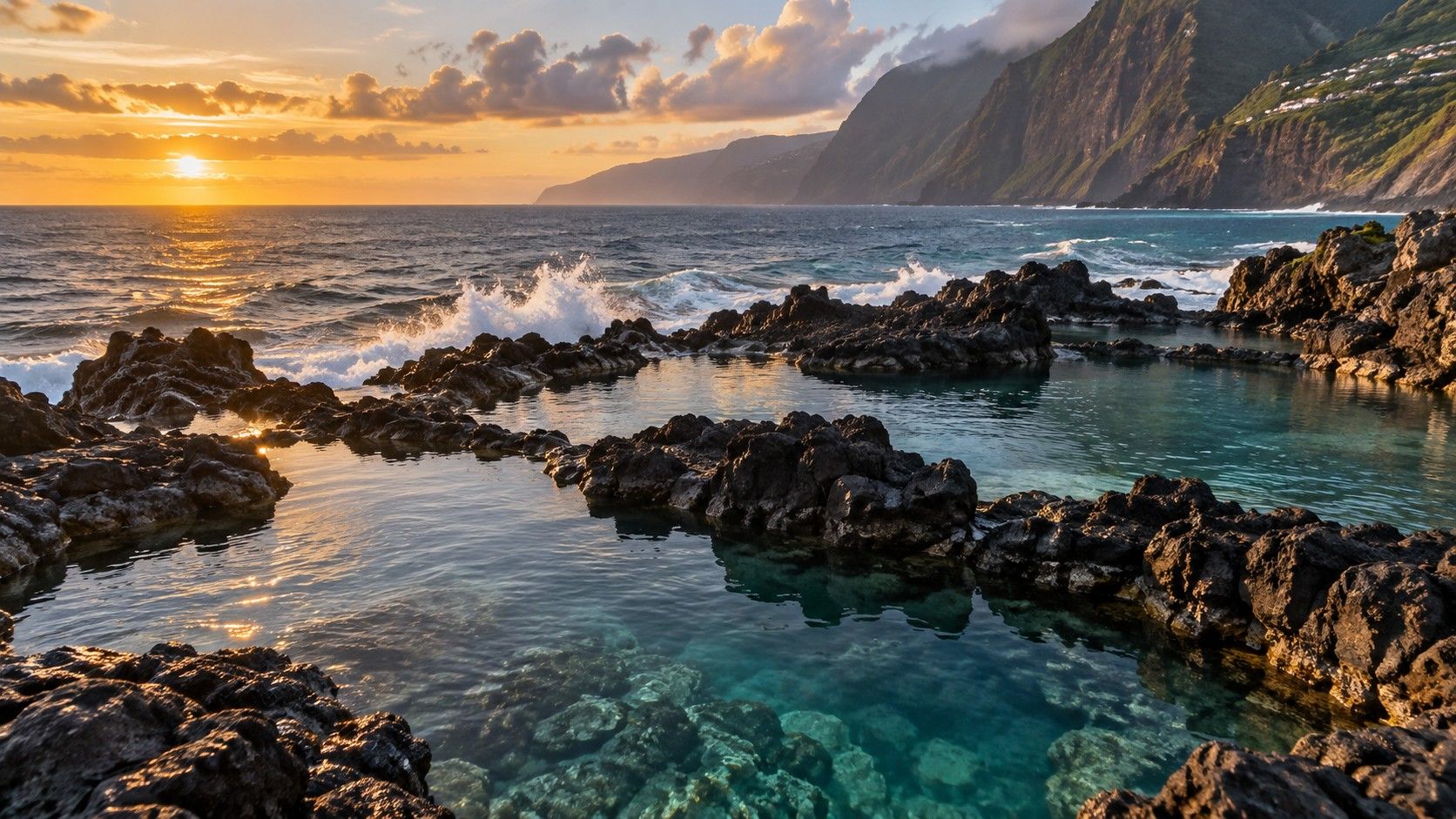
People arrive in Madeira with a beach towel and a Mediterranean picture in their head. Then they meet the coast: black rock, steep green slopes, water with a definite Atlantic opinion, and villages where the easiest place to swim is a pool cut into lava. That is not a flaw in the island. It just means that swimming works better as part of a day out than as a promise made before breakfast.
Madeira is an island for sea stops, not one beach routine
Madeira has beaches, but it is not built like an island where you choose a resort, walk ten flat minutes to sand and repeat the same swim for a week. Much of the shore is cliff, harbour, pebble or exposed rock. The road often arrives high above the water, and the last stretch may involve steps, a steep lane or a parking search. A handsome view from the road does not automatically mean there is an easy place to enter the sea below it.
That changes the way I would pack for the day. Keep swimwear, a towel and sandals in the car or day bag instead of wearing them in optimistic anticipation. Add a light layer for the north coast, where a warm south-side morning can turn breezy after one tunnel. Water shoes are useful on rough surfaces, although they do not turn slick volcanic stone into a sensible place to hurry. The wet walk back up the steps is where flimsy flip-flops tend to reveal their limitations.
There is also a difference between a beach worth seeing and one worth planning around. A stop at Seixal can be excellent even when swimming is not sensible. Calheta may suit an easy afternoon if you are staying nearby. Machico can be the practical answer after an east-coast outing. If a swim matters to the day, give it a backup. Madeira's weather divides between coasts, and the Atlantic does not consult your booking confirmation.
Natural pools are managed edges of a real sea
Madeira natural pools are often described as giant baths. That is only half true. At Porto Moniz, lava walls and built facilities create a more manageable place to swim than an open rocky cove. There may be changing areas, showers, lifeguard supervision at certain times and a clearer way in and out. Even there, the water is sea water, usually brisk, and waves can still change the mood of the place.
Informal pools and rocky inlets need a more cautious reading. A flat surface can hide surge at the edge, and algae-covered stone is unforgiving. Watch the water for a few minutes before getting changed. Notice where people are entering, whether anyone is coming back out quickly, and whether a barrier or flag is telling you something. If staff close a section, take it as the end of the conversation. A photograph of foamy water is not worth a sprained ankle.
Before getting in anywhere, look for flags, signs and the behaviour of the water near the access point. Waves that break gently on sand can still pull hard on the way back out. At a rocky pool, swell may push water over the edge in irregular bursts. If the entry looks awkward while you are dry, it will not improve after a cold swim when your hands are slippery and you are carrying a towel.
Porto Moniz belongs in a full west-coast day
From Funchal, Porto Moniz is far enough away that it deserves a proper day rather than a rushed afternoon. There are fast roads for stretches, but there are also tunnels, bends, slow traffic and the usual temptation to stop at every viewpoint. Reach the pools before you are tired, then decide whether to swim after seeing the conditions in person. That avoids arriving late, hunting for parking and feeling obliged to jump in because the towel has been in the car all day.
The formal pool area is the easier choice when you want facilities and a predictable entry. Around it, there are exposed lava formations and more casual waterside spots. Do not assume the free-looking option is better value if you are carrying children, dislike scrambling or need a changing room. A paid entry can be the least fussy part of the day. There is no need to pay merely to prove you visited, though; the public walkways give plenty of views.
After a swim, eat before continuing. Porto Moniz is not a place where you need to race into the car to collect Seixal and Ribeira da Janela in the same breath. A long lunch may mean one less stop, but it makes the return easier. If the weather is holding, continue east toward Seixal. If cloud is gathering over the mountains or the driver has had enough bends, take the simpler route home and save the northern beaches for another outing.
Seixal feels most like a beach, with north-coast caveats
Seixal is the place many people mean when they ask about the best beaches in Madeira. Dark sand, green cliffs and an open north-coast view give it a proper beach atmosphere when the light breaks through. It is more tempting than a rocky pool for anyone who wants to stretch out or walk at the waterline. The black sand can get hot in stronger sun, and it finds its way into towels with impressive efficiency, so do not wear your favourite white linen.
What Seixal does not offer is guaranteed calm water. The north coast faces the Atlantic directly, and sea conditions can make a beach walk more appropriate than a swim. Read the flags, look at the shore break and do not treat other people in the water as a personal safety certificate. A confident local body surfer and a visitor unused to a pulling current are not making the same decision. If you are uncertain, stay where you can stand or leave the swim for another day.
Parking and access shape the experience as much as the beach. In busy periods, give yourself time to find a legal space and walk down rather than circling the village in a bad mood. Seixal is better when you can stay for a coffee or a slow stroll afterward. A ten-minute dash between Porto Moniz and the next viewpoint rarely shows it at its best. For a road trip, I would make Seixal the one beach stop on the north coast rather than trying to collect every cove nearby.
Machico and Calheta make sand simple
Machico makes sense on the east side of the island, especially after Ponta de São Lourenço, Caniçal or an airport-area arrival. Its bay is more sheltered than many north-coast spots, and the town provides useful ordinary things: places to eat, toilets, shade and a flatter walk than you get in many Madeira villages. It is not an isolated wilderness beach, which is exactly why it can be the right answer when someone in the group wants an uncomplicated swim.
Calheta is the south-west alternative. It is often warmer in feel than the north coast and has a more resort-like rhythm, with a marina nearby and a beach setup that is straightforward to use. The sand is imported rather than a geological accident of Madeira, but that is not a scandal; it simply means bare feet have an easier time. If your accommodation is in Calheta or Ponta do Sol, it can be a good late-afternoon stop once the driving is done.
| Place | Best use | What can change the plan |
|---|---|---|
| Porto Moniz | A pool stop within a full west-coast day | Rough sea, crowds and a long drive back to Funchal |
| Seixal | Black-sand scenery and a weather-dependent swim | North-coast swell, limited parking and wind |
| Machico | An easy east-side beach break with town facilities | Timing after an eastern hike or airport traffic |
| Calheta | A relaxed south-west afternoon near the marina | Busy sunny periods and a longer detour from Funchal |
Neither Machico nor Calheta needs to become a grand destination if the rest of your plan is elsewhere. They remove friction: you can park, change, get a drink and decide whether an hour in the water is enough. That is often more valuable than driving an extra hour toward the most photogenic beach in a forecast that has already changed its mind.
Funchal lidos work well on a city day
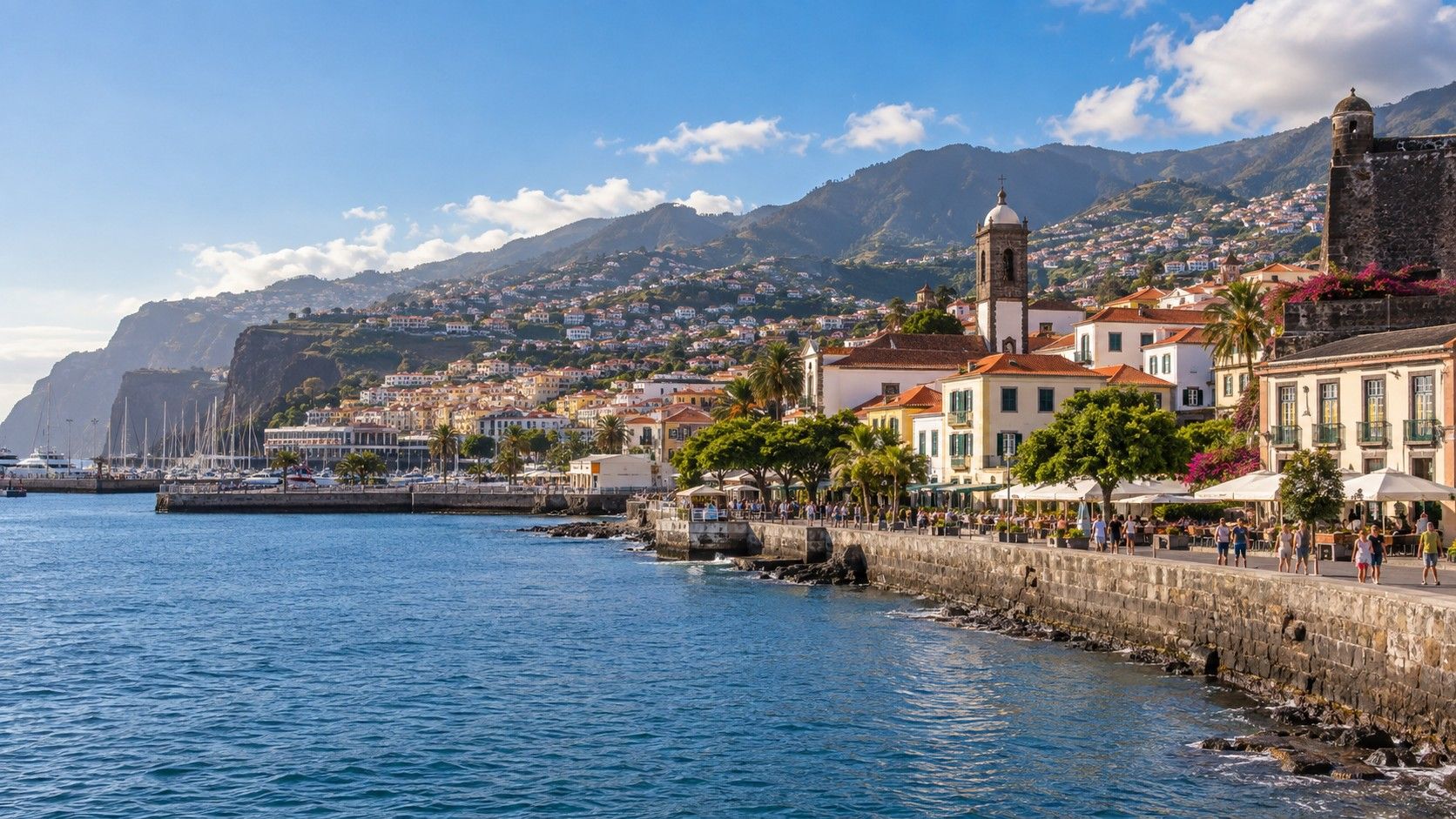
When you are staying in Funchal, the lido areas are often more useful than taking the car out in search of sand. They give you a managed way to use the sea, with access points, sunbathing areas and facilities nearby. Doca do Cavacas, the Lido area and other seafront complexes suit an afternoon after the old town, Monte, or simply a slow start after dinner the night before.
The appeal is convenience, not pretending that Funchal has a hidden tropical beach. You can walk or take a short taxi, keep hotel clothes dry until the last minute, and leave when you are done. Families and less confident swimmers often find this less stressful than an exposed natural pool. Check access arrangements on the day instead of relying on an old blog post; seasonal operations and sea conditions can affect them.
Build the swim around the route, then let the day decide
On an east-coast day, Machico is easy to place after a morning walk or before returning to Funchal. On a south-west day, Calheta can be the late stop after Ponta do Sol. On the big west-coast loop, Porto Moniz and Seixal work together only if you leave enough time to avoid rushing either one. The mistake is trying to fit a swim into every coast you pass. You will spend more time changing clothes than looking at Madeira.
A good compromise is to choose one likely swimming stop and one scenic backup. Put the towel in the car, check conditions as you go, and stay flexible. If Seixal is windy, Porto Moniz may still be worth a look. If Porto Moniz is crowded or rough, a south-coast lido on another day may be a better use of energy. That approach sounds less decisive than a list of must-swim places, but it is how people usually end up enjoying the water rather than negotiating it.
Madeira beaches and natural pools are at their best when they interrupt a road trip rather than dominate it. Swim where the sea, access and your own confidence line up. Then dry off, have lunch, and keep the rest of the island in view. The coast is generous enough that you do not need to conquer every entrance point to feel you have used it well.