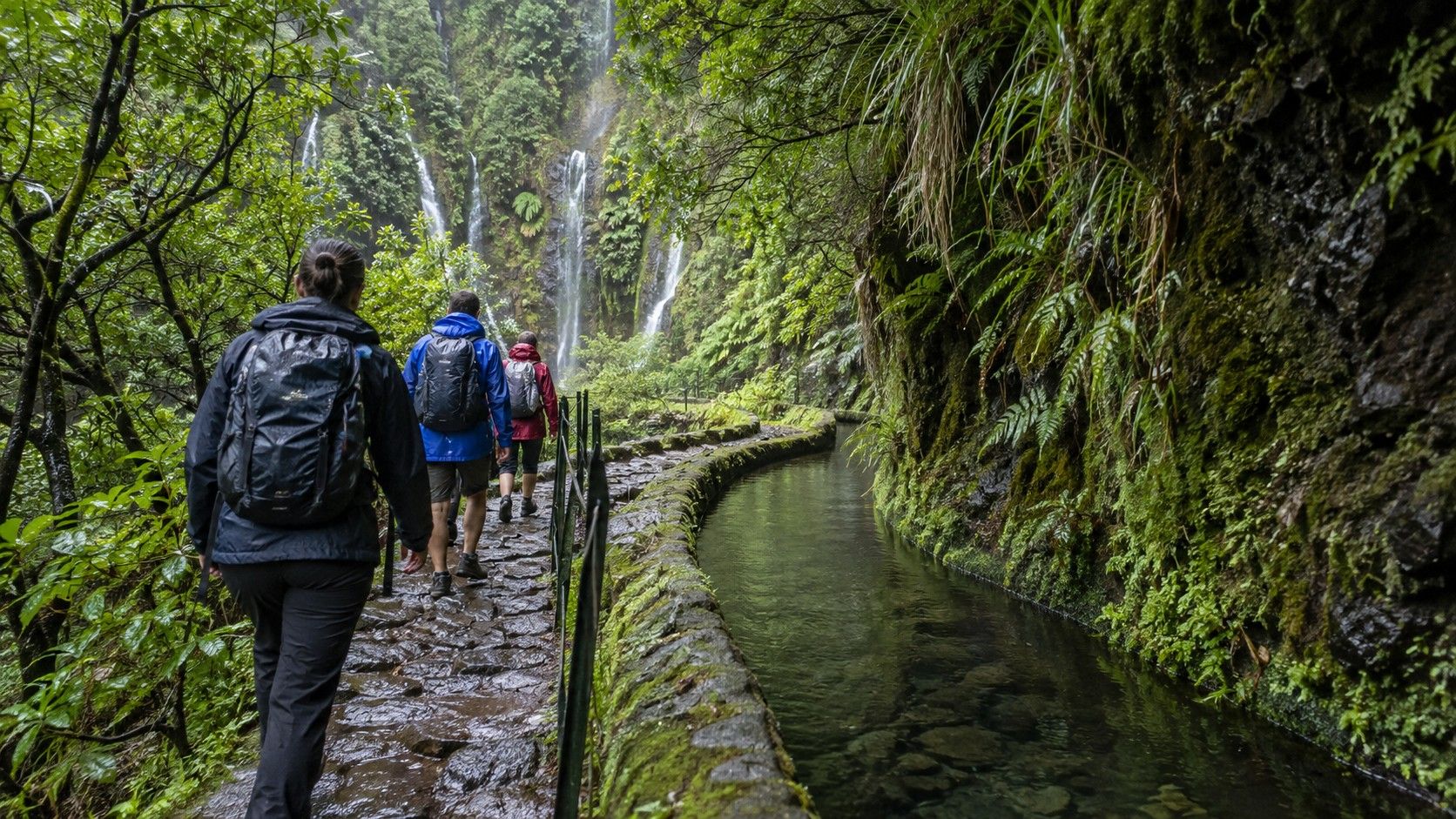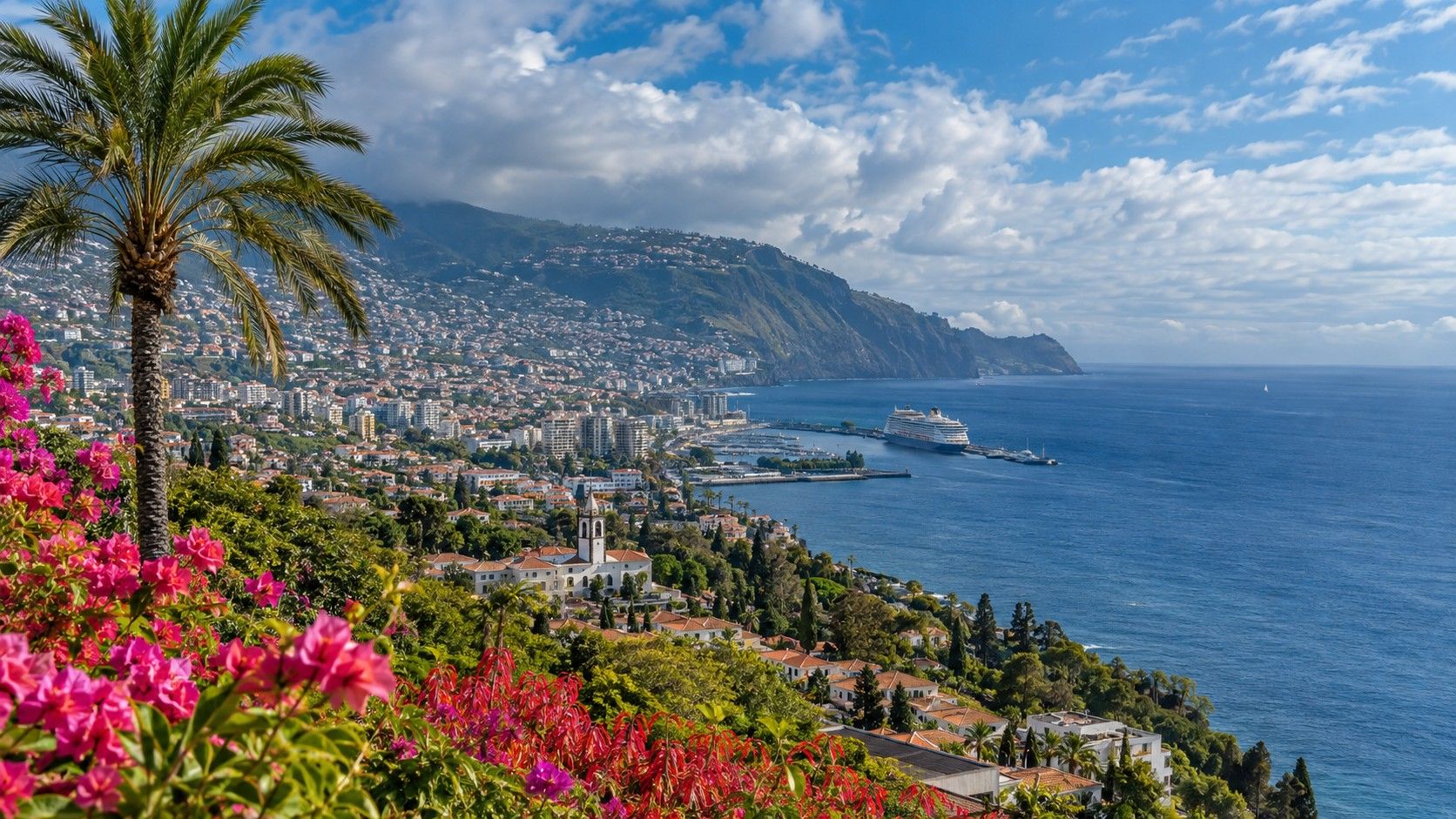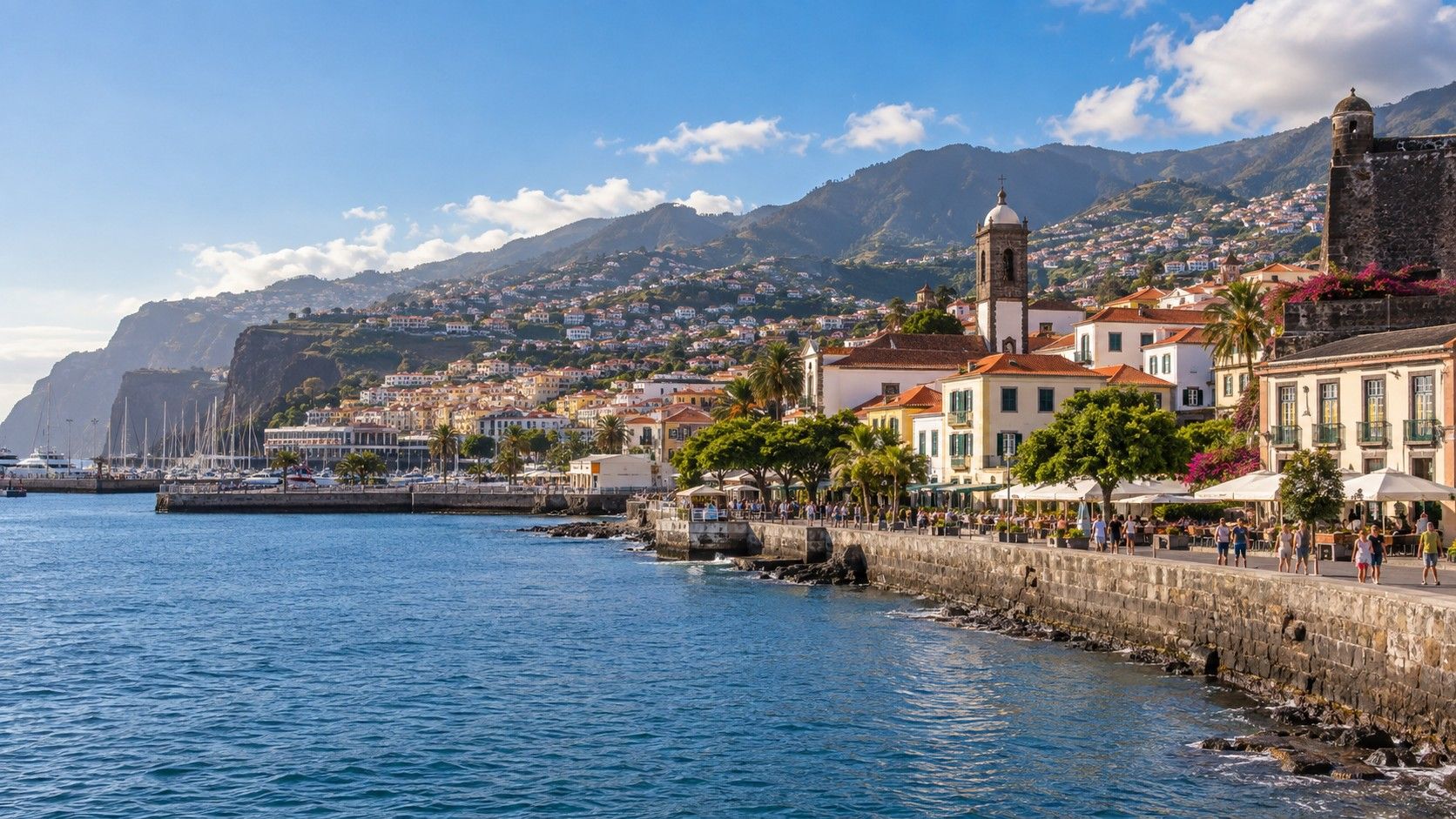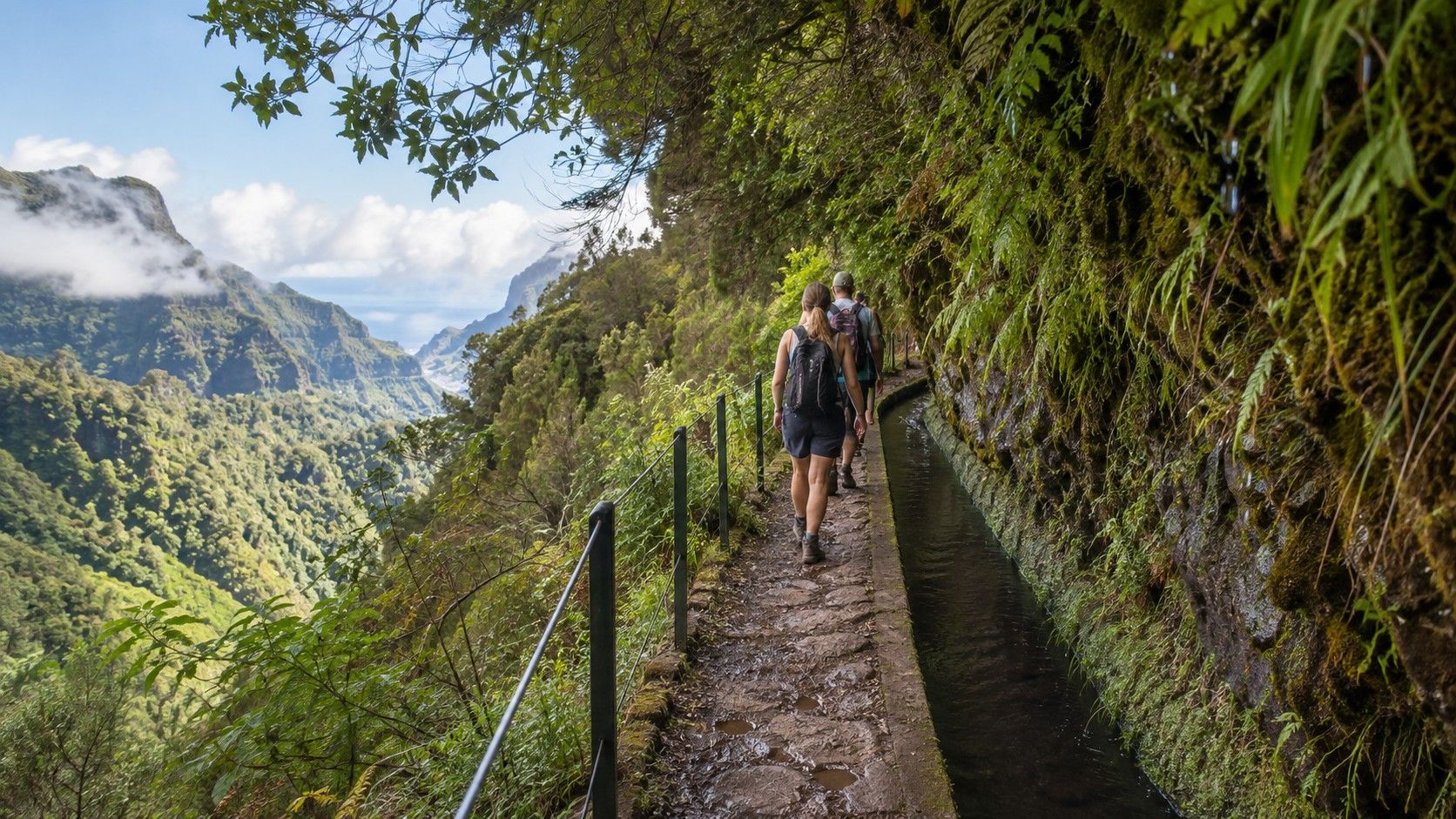
Levada walks in Madeira look wonderfully straightforward on a phone: a line through green hills, a waterfall, a promised return before lunch. Then the line becomes a wet path, the car is parked far from the start, and the light in a tunnel turns out to matter more than the photo did. The good route is the one that still feels manageable after the weather, transport and your own pace have had their say.
Read the route beyond its headline
A famous name can hide a fairly demanding day. The 25 Fontes area in Rabaçal, for instance, is often described through the lake and cascades, but the decision begins with the approach and the return climb rather than the view itself. A walk listed as moderate may include stone steps, muddy corners and a slow queue where the path narrows. I treat the advertised distance as the central portion of the day, then add the walk from parking, stops for photos, and the inevitable moment when somebody wants a snack just after putting the bag away.
Look for three things before choosing among the best levadas Madeira has to offer: whether the route is linear or circular, how much ascent comes at the end, and where the path sits in relation to a drop. A largely level levada can still feel tiring when it runs for hours beside a wall with no easy place to pass. By contrast, a shorter route around Ribeiro Frio may be a better first outing if the group has arrived late, has uncertain knees, or simply wants to see how it responds to damp stone.
The word “easy” deserves suspicion. It can mean low elevation and good signage; it can also mean that an experienced hiker found the exposure ordinary. Check recent official route information, the stated surface and any notes about tunnels. Then picture the least enthusiastic person in your party standing at the narrowest point. That mental test is more useful than a heroic rating on a booking page.
Choose a walk that matches the way you will get back to the car
Many Madeira levada walks are out-and-back, which is simple to understand and a gift when cloud changes the plan. You turn around when the day has had enough. Linear routes can be more elegant on paper but require a taxi arrangement, a bus that actually suits the timing, or two cars. The PR6 routes near Rabaçal are a common place for this confusion: the walk may be clear, while the final parking and shuttle choice remain an afterthought until the morning.
For a rental-car day, I prefer a route with an uncomplicated return unless there is a strong reason to do otherwise. A saved taxi number, enough phone battery and a meeting point written down properly are worth more than vague confidence that a signal will appear. The north and interior can be patchy, and it is irritating to finish a wet walk with a perfect view of your car several valleys away.
| Route shape | Works well when | Check before leaving | Common snag |
|---|---|---|---|
| Out-and-back levada | Weather is uncertain or the group has mixed fitness | Turnaround time and total return distance | Walking too far before admitting the return will be slow |
| Short circular trail | You want a first-day test near Ribeiro Frio or a forest stop | Whether the loop is fully open and clearly signed | Assuming “short” means flat or dry |
| Point-to-point route | You have transport arranged at both ends | Pickup point, signal, driver contact and daylight | Finishing after the agreed pickup time |
Set a turnaround time before the first bridge or tunnel, especially in winter or on a day with a long drive back to Funchal. It sounds fussy, but the island’s roads make late finishes heavier than they need to be. A 3pm decision to turn around can preserve dinner and a safe descent; a 4pm decision made after a long photo stop sometimes produces a rushed final hour.
Tunnels and footwear decide whether a level path feels easy
Tunnels are part of the character of levada walks Madeira visitors remember, though they are rarely the romantic part. Some are short and open at both ends; others are dark, low and wet enough that a phone torch feels inadequate. Carry a proper light or a fully charged headlamp, and keep it easy to reach rather than buried under a rain jacket. A companion with a bright lamp is useful, yet I would not make one person responsible for everybody else’s footing.
Footwear is less about owning serious hiking boots than about grip and confidence on slick stone. Trainers with a worn smooth sole can be miserable after rain, particularly on steps where moss collects. A waterproof shoe helps, but it will not solve a loose heel or a shoe that has never been worn for more than an hour. On the Rabaçal paths and shadier stretches near Queimadas, wet vegetation can keep the surface damp long after the road above looks dry.
Bring a layer even on a warm Funchal morning. The temperature and wind can change quickly in forested sections, and a tunnel adds a cool, damp pause to the rhythm of the walk. Water still matters in cloud. So does a small amount of food. The goal is not to pack for an expedition; it is to avoid the silly situation where a two-hour extension becomes stressful because everyone expected a café halfway along a water channel.
Let the weather choose the altitude, not the other way around
Madeira is small enough for forecasts to sound reassuring and mountainous enough for them to mislead. A dry icon for Funchal says little about Rabaçal, Paul da Serra or the woods near Ribeiro Frio. Low cloud can turn a panoramic plan into a cold, damp walk with no landmark beyond the next bend. That does not make a levada day pointless, but it changes what you should choose: sheltered forest and a shorter return are more sensible than a long exposed route.
I check the forecast the previous evening, then look again before driving out. The second check matters because wind, cloud base and rain can rearrange the island overnight. If the plateau is blanketed in mist, move to a lower route or give Funchal a proper morning instead of trying to force the original plan. The gardens, old streets and harbour are a decent recovery option when the high ground is in a bad mood.
Rain changes the arithmetic. It slows the walk, makes passing trickier and can make a shaded stone edge feel much narrower. After persistent heavy rain, use the most current official trail status rather than assuming a route is fine because it appeared in a guidebook. Waterfalls and channels respond to weather, and access restrictions exist for a reason. The best decision can be a short local walk, lunch, and a second attempt on a clearer day.
Check closures on the day, then make a plan with room to change
Trail status is not a decorative footnote for Madeira trails. PR routes can close for maintenance, storm damage, rockfall risk or work on access sections, and a route that was open during somebody else’s holiday may not be available this week. Check the official regional source close to departure and again on the morning of the walk. Also read the detail rather than stopping at an open-or-closed symbol: partial closures, altered access and parking limits can change the practical plan.
Do not build a holiday around one celebrated walk. Keep two substitutes that suit different weather: perhaps a forest levada near Ribeiro Frio, a Rabaçal option for a stable day, and a lower south-coast outing for poor mountain visibility. That small menu is enough. It stops the familiar scramble of searching reviews in a car park while everyone watches the cloud settle over the road.
Parking needs the same modest realism. Arrive early for popular starts, avoid blocking narrow lanes, and expect the last approach to take longer than mapping software suggests. If a car park is full, do not invent a space on a bend because another visitor has done it. Turn back, choose the alternative, and regard the saved argument as part of the holiday. Madeira has plenty of good walking; a cramped roadside is a poor reason to turn one day into a test of nerves.
Build a first levada day around comfort rather than ambition
For a first walk, choose a route that leaves you curious for another rather than exhausted in the back seat. The Rabaçal valley deserves its reputation, but it is more enjoyable when you accept the descent and return as the real day, not as an inconvenience attached to 25 Fontes. Ribeiro Frio can work better when the weather is mixed or you want to combine a shorter trail with a stop on the east side. Neither choice needs to become a contest with the route descriptions you saved at home.
Start early enough to walk at your own pace, but do not confuse an early alarm with a compulsory full-day march. Pause where there is room, let faster walkers pass, and keep enough time for the return through the sections that felt easy downhill. On levada paths, fatigue tends to show up late: attention drifts, small steps become clumsy, and a tunnel that seemed harmless in the morning feels different when daylight is fading.
The most satisfying Madeira levada walks are usually the ones with a little margin built in. You finish with dry enough socks, a working phone and enough energy to enjoy the drive back through the island instead of merely enduring it. That is a better measure of a route than collecting the longest distance or the most waterfall pins in one day.